Industry, Community
Is it time to rethink how we train apprentices in the U.S.?
Let's think outside the box here 🌍 What if the future of our workforce was shaped by the best ideas from around the world!
Martin Electric and HVCC have teamed up again—this time not just to host, but to learn. Inspired by Denmark’s progressive approach to vocational education, we explored how to bring elements of the Danish curriculum into our apprenticeship programs right here in New York State. During a tour of the Barnet Mills jobsite, where Martin Electric and BBL Construction are revitalizing the historic Shotty Mills in Rensselaer, the conversation turned from tools to transformation.
As the workforce evolves, so must the way we prepare it. One big question came up during a recent international exchange that’s hard to ignore: Are our apprenticeship programs doing enough to prepare well-rounded tradespeople—or are we pigeonholing students into narrowly defined roles?
That question was front and center when Martin Electric and Hudson Valley Community College (HVCC) teamed up to host vocational students from Denmark’s Herningsholm Vocational College (HVC). But this wasn’t just a tour—it was a learning experience for everyone involved, and a chance to reflect on how we structure apprenticeship training in New York State.
Unlike many U.S. programs, Denmark’s vocational education system offers students comprehensive exposure to installation, design, project planning, modeling, and estimating—all before graduation. They don’t just teach how to do the work, but why and how to plan it. That’s a big contrast to many American apprenticeships, where students often begin as installers and grow into other roles over time, usually on the job.
On the Ground at Barnet Mills
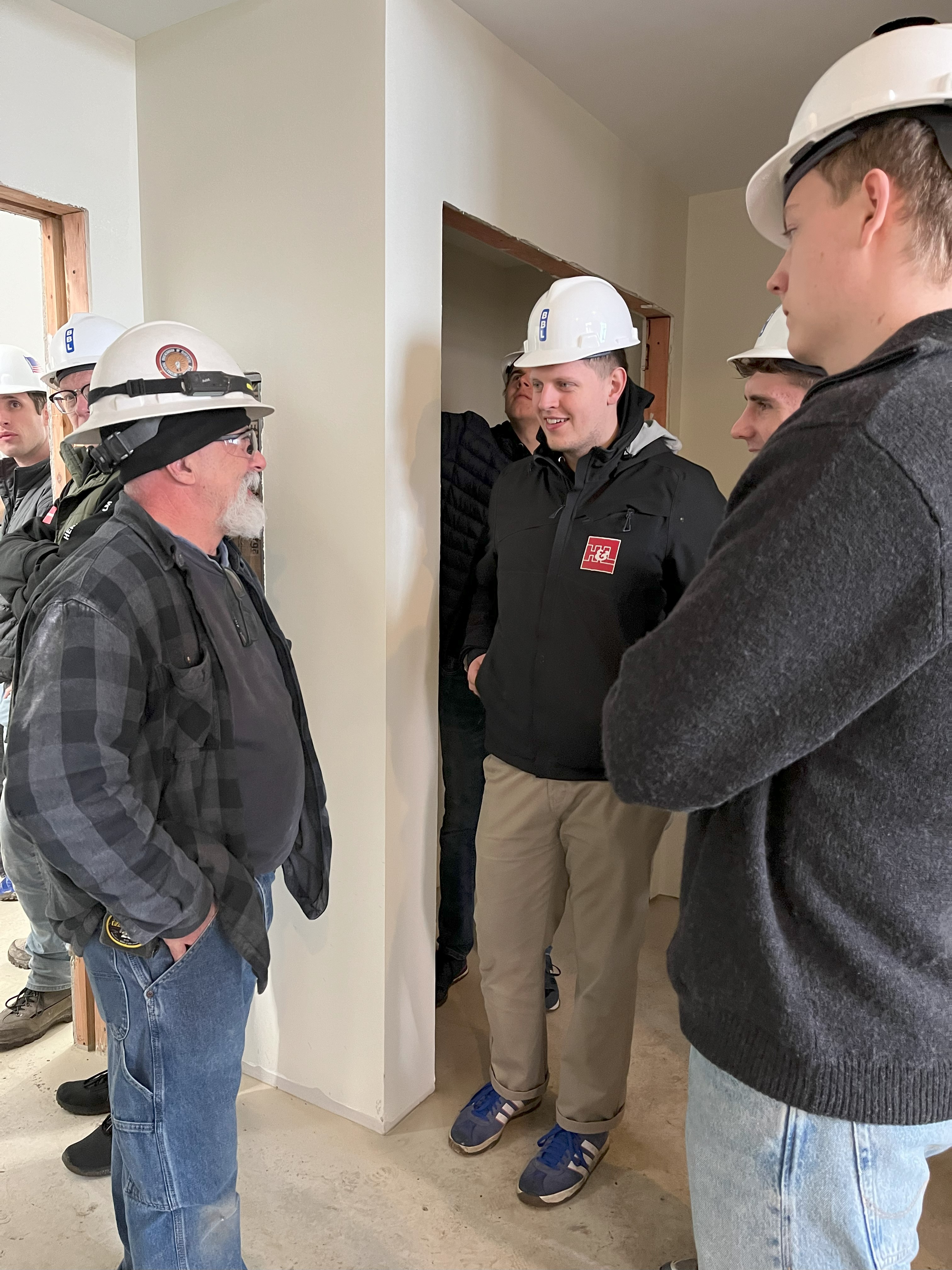
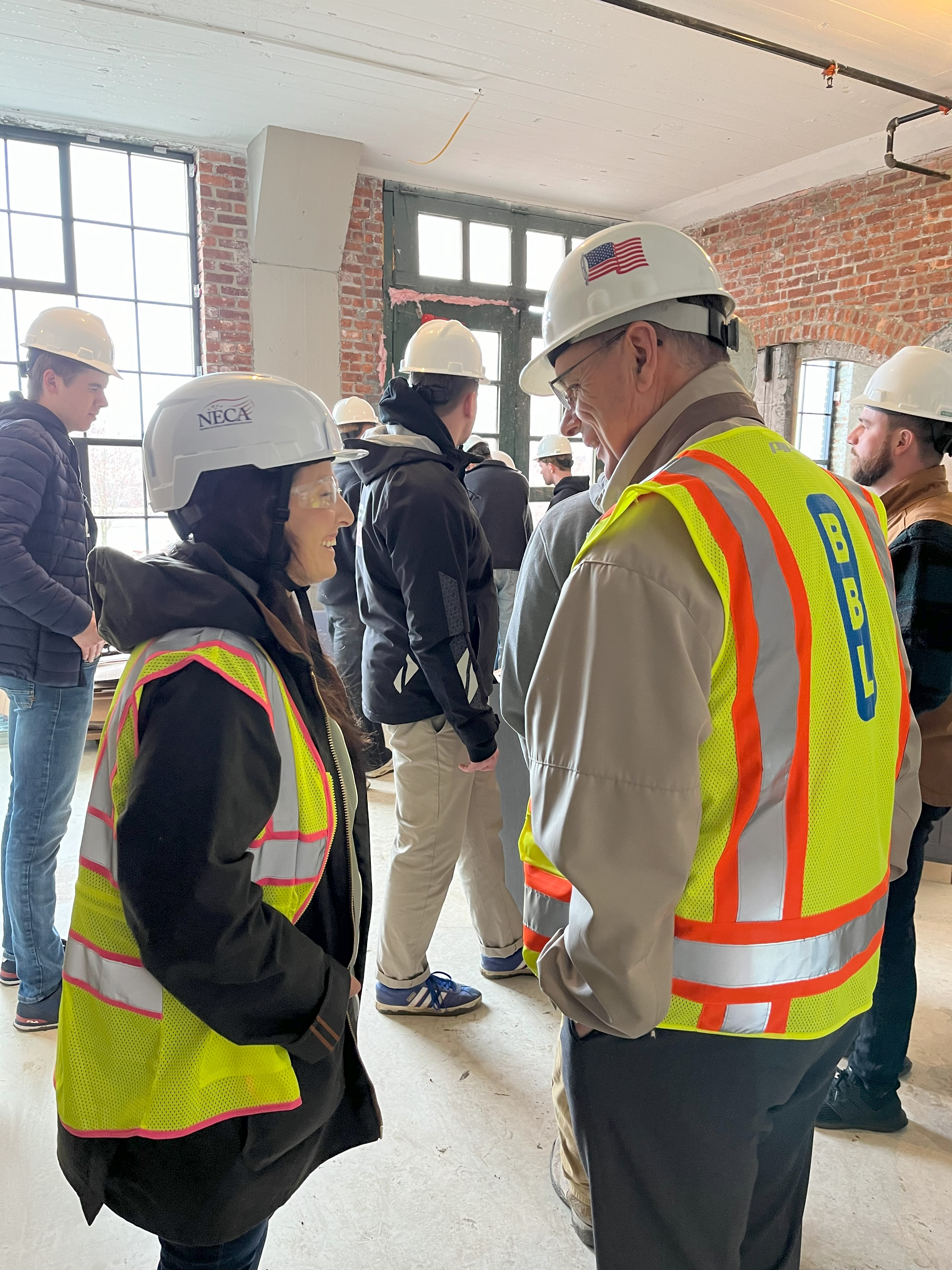
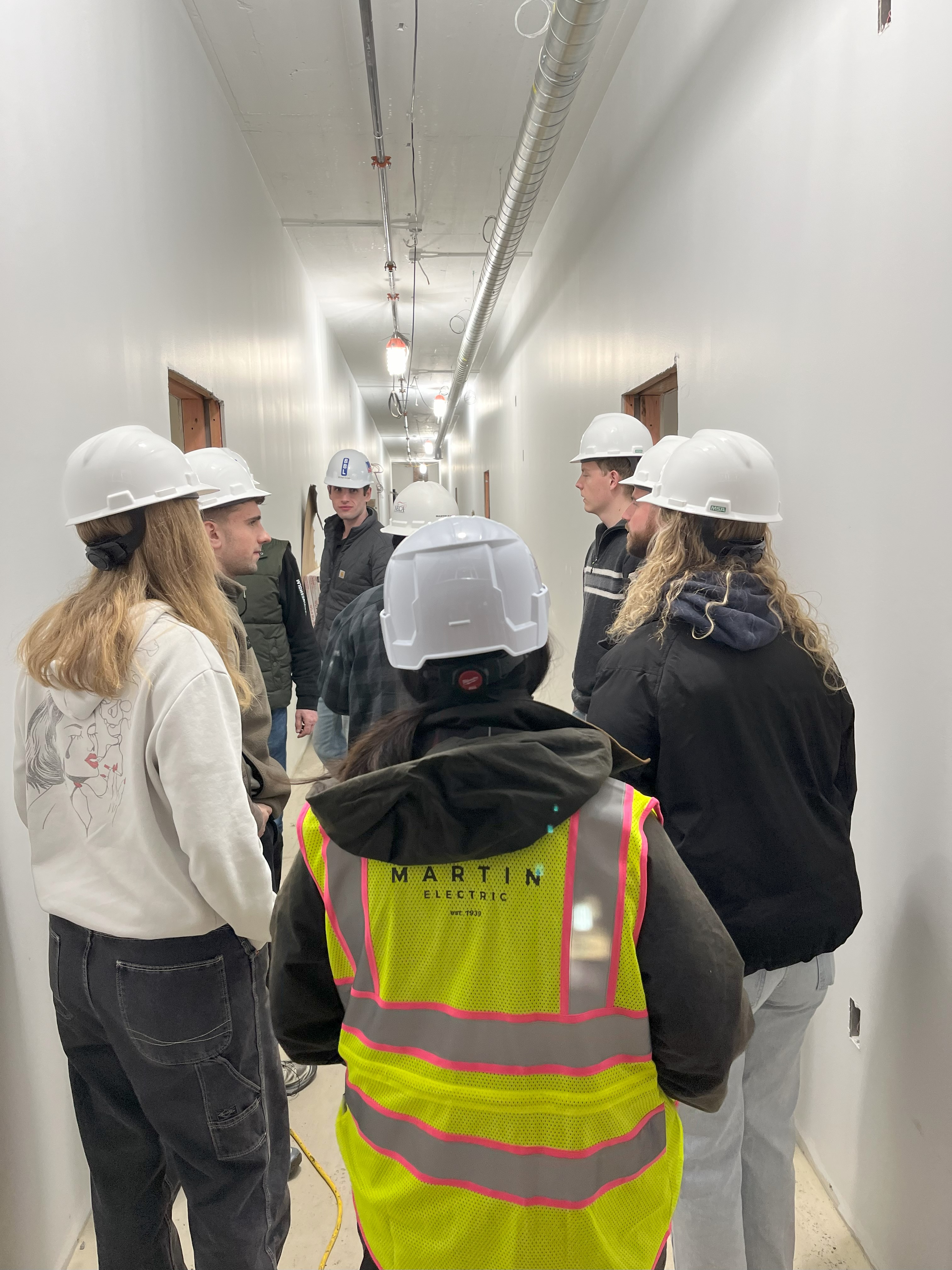
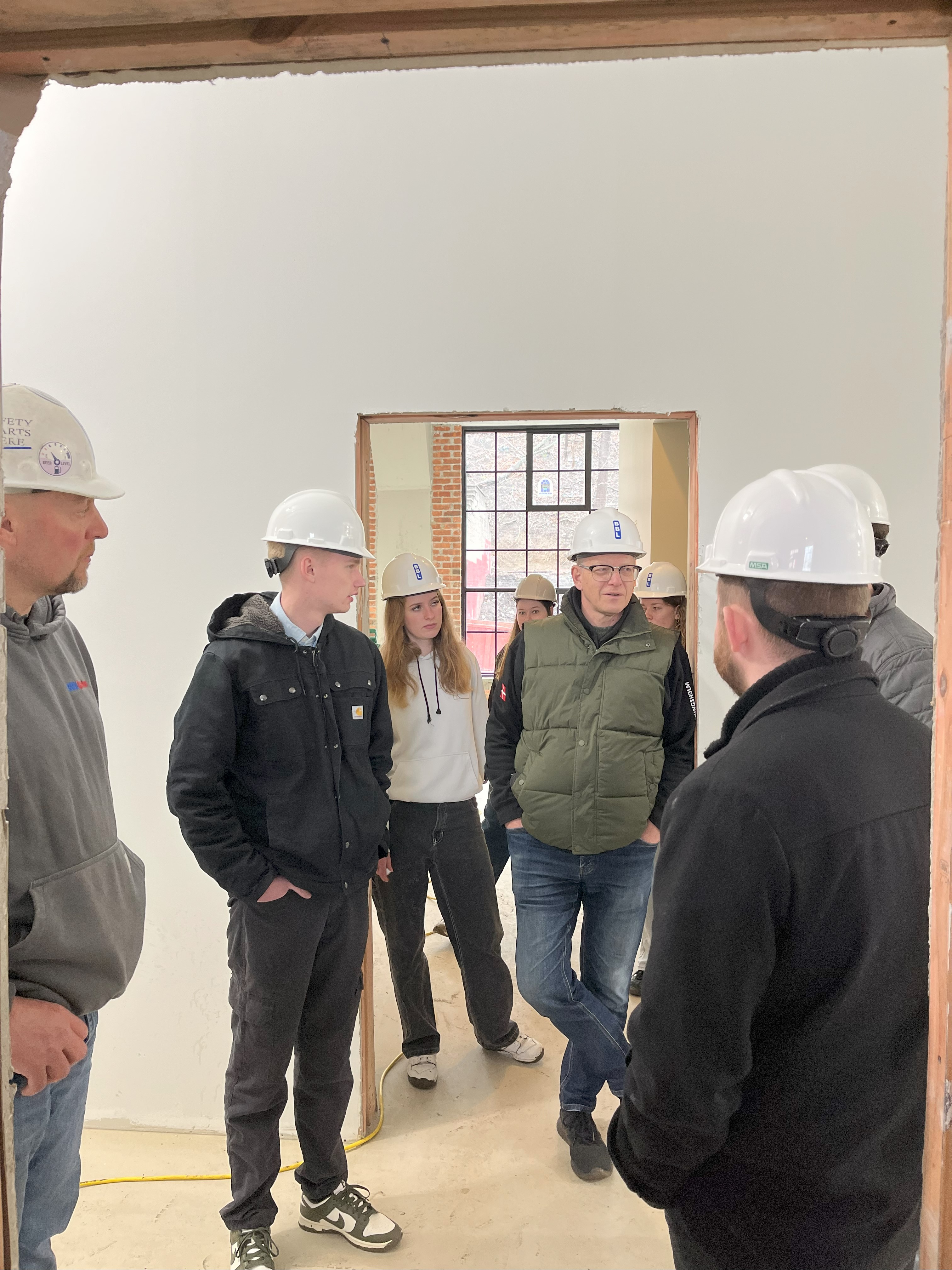
The Danish carpentry students visited the Barnet Mills jobsite in Rensselaer, where Martin Electric and BBL Construction are working on a 72-unit reconstruction project. After a site tour led by Ryan Eute (BBL Construction) and Tom Carnevale (Martin Electric), students met with Martin Electric President Kendra Hart, who spoke about the growing demand in the Capital Region’s construction industry—and how training programs must evolve to keep pace.
The visit wrapped up with a roundtable discussion covering:
- Curriculum structure
- Apprenticeship training differences
- Use of technology on job sites
- Differences in building codes (fire rating, wood vs. metal framing)
- The growing role of mixed-use development in Denmark vs. industrial focus in the U.S.
Tech, Trades & Training: A Global Comparison
Danish students were particularly interested in how U.S. companies use technology like BIM, CAD, and digital modeling. Martin Electric and BBL explained how these tools help streamline material planning and troubleshoot issues before work begins. Meanwhile, the HVC students shared how digital tools are integrated into their training from the start—giving them a head start on high-tech job sites.
Changing the Narrative Around Trades
Another key conversation: how skilled trades are viewed in society. In Denmark, students often choose vocational paths straight out of middle school—and it’s seen as a respected, first-choice career. In the U.S., that perception is still catching up. Partnerships like this help shift the narrative by showing the value, complexity, and innovation in today’s trades.
The Cultural Exchange Experience at HVCC
Hudson Valley Community College (HVCC) continues to strengthen its international partnership with Herningsholm Vocational College (HVC) of Denmark. In spring 2025, HVCC proudly welcomed its fifth delegation of HVC students to New York’s Capital Region as part of an ongoing cultural exchange program focused on workforce development in the skilled trades.
This year’s visiting group includes 11 vocational students training to become carpenters and joiners. During their stay, they’re taking part in on-campus learning experiences, peer-to-peer collaboration, and field visits with local employers, including jobsite tours hosted by industry leaders like Martin Electric and BBL Construction.
These immersive experiences are designed to provide the students with a real-world view of the U.S. construction industry—complementing their classroom learning and broadening their understanding of how the trades function globally.
Takeaway: Cross-cultural programs like this one not only expand students’ perspectives, but also help local employers connect with global best practices and inspire a new generation of skilled tradespeople.
What Do You Think?
Is it time to rethink how we train apprentices in the U.S.?
Are our apprenticeship programs doing enough to prepare well-rounded tradespeople—or are we pigeonholing students into narrowly defined roles? Should we follow Denmark’s lead and offer a more holistic, tech-forward approach that includes design, estimating, and project management from the start?
We’d love to hear from other contractors, educators, and students—what are you seeing in your region? Contact